The History and Everyday Use of 58
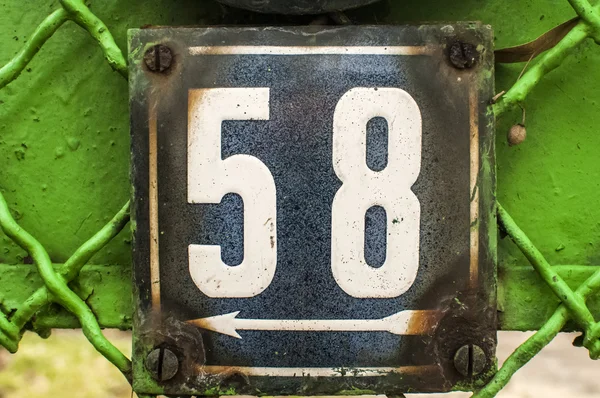
58 may look like a plain two-digit number, yet it shows up across history, culture, and mathematics. Some numbers are symbolic, others are simply practical. 58 belongs to the practical group: a quiet "worker" number we meet often without noticing.
Historical traces
There is no single historic event that makes 58 a turning point, but that does not mean it is absent from history. Calendars, ages, year-end calculations, and counting systems use it regularly. Many archives and reports include 58 as an index or section marker, leaving a subtle footprint across records.
Its place in math
In mathematics, 58 is:
- An even number divisible by 2
- Not prime (2 x 29)
- A clean composite with simple factors
- Written as 111010 in binary
These properties make 58 a simple but functional number in everyday arithmetic.
Where we see 58 in daily life
58 appears in practical contexts:
- Ages and milestones: It can show up in statistics around retirement or career transitions.
- Product codes and serial numbers: 58 is a common index in numbering systems.
- Transport and infrastructure: Bus lines, highway exits, and postal codes often include 58.
- Culture and sports: It can be chosen as a jersey number or represent a role in a team.
Why 58 acts like a "balanced" number
Because it is built from two primes (2 and 29), 58 feels balanced. Its evenness makes it easy to divide and plan with, which is why it tends to be a "smooth" choice in many calculations.
A short conclusion
58 may not carry grand symbolism, but it quietly holds space in records and everyday routines. Mathematically simple, practically useful, it reminds us that some numbers are valuable not for their flash, but for their steady reliability.